

Signs Your Home Has Poor Indoor Air Quality

Indoor air quality is easy to take for granted until something feels off. Because you can't always see or smell a problem, poor indoor air often shows up as comfort and health complaints instead. Here are the most common warning signs your home's air needs attention, and the simple steps, starting with your HVAC filter, that fix most of them.
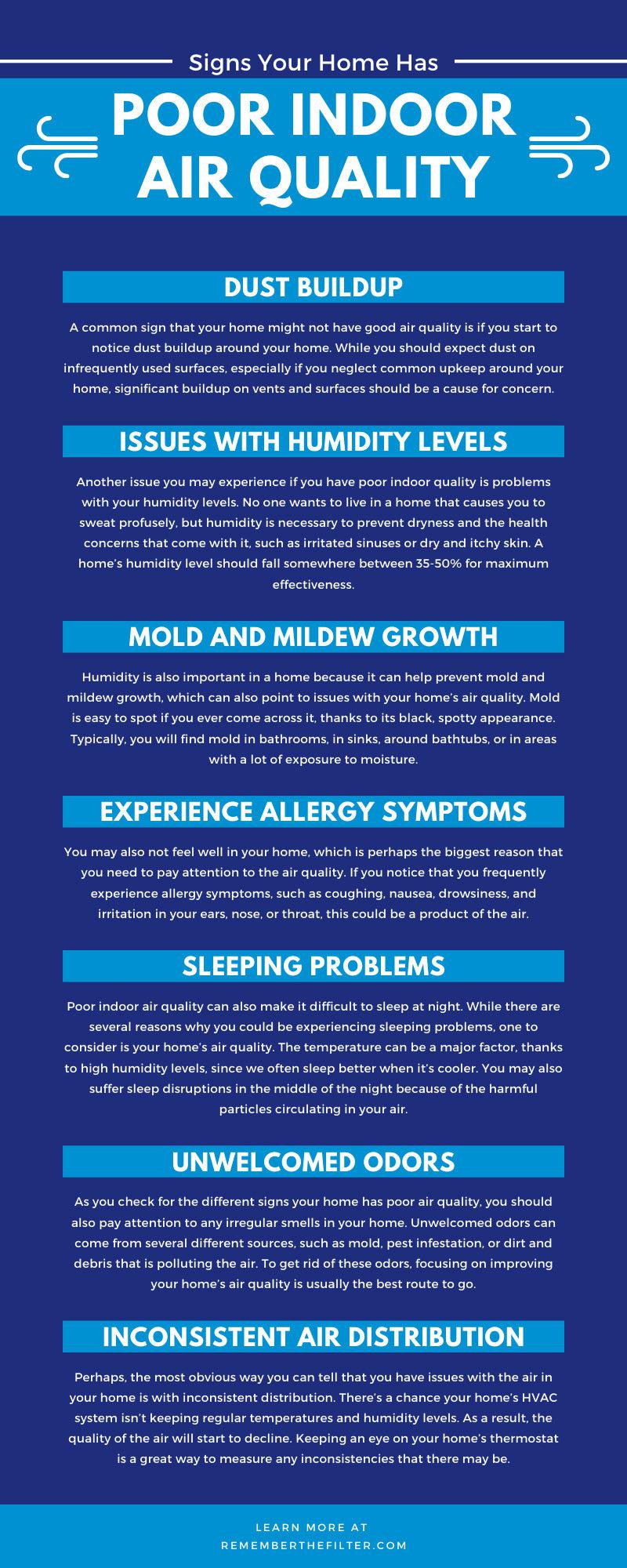
Persistent Dust Buildup
A little dust on rarely used surfaces is normal. Heavy, fast-returning dust on vents, shelves, and furniture is not. When dust reappears within a day or two of cleaning, the usual culprit is your HVAC system: either the filter is overdue, the wrong type, or missing altogether, so nothing is capturing particles before they recirculate. A quality furnace filter changed on schedule is the first line of defense. Our guide to winning the battle against dust covers the rest.
Humidity That Feels Off
Air that feels clammy and heavy, or so dry it leaves your skin and sinuses irritated, points to a humidity imbalance. Most homes are most comfortable between roughly 35 and 50 percent relative humidity. Too much moisture invites mold and dust mites; too little causes dry throat, itchy skin, and static. A humidifier or dehumidifier usually solves it. Our overview of humidity and air quality explains the connection in more detail.
Visible Mold or a Musty Smell
Mold gives itself away with dark, spotty growth and a persistent musty odor, most often in bathrooms, around sinks, and anywhere moisture lingers. Beyond the surface growth you can see, airborne mold spores circulate through your ducts and trigger allergic reactions. Controlling humidity and running exhaust fans helps, and a filter rated to capture spores adds protection. Our look at the connection between filters and mold prevention goes deeper.
Allergy Symptoms Indoors
If coughing, sneezing, congestion, or itchy eyes ease when you leave the house and return when you come home, your indoor air is a likely suspect. Pollen, pet dander, dust mites, and mold all accumulate indoors and recirculate through the HVAC system. The fix is usually a higher-efficiency filter that actually captures those allergens. Homes with pets or allergy sufferers often benefit from stepping up to a pet-friendly filter rating, and our guide to allergies and your HVAC system explains how the system can help or hurt.
Trouble Sleeping
Poor air quality can quietly wreck your rest. High humidity makes a room feel warmer than it is, and circulating irritants can cause the congestion and coughing that break up sleep. If you wake up stuffy or restless without an obvious cause, cleaner air and better humidity control are worth investigating.
Lingering Odors
Odors that won't clear, even after you clean, often signal a deeper air-quality issue: mold, trapped cooking or pet smells, or debris in the ducts. You may stop noticing a smell you live with daily, so a useful test is to leave for a few hours and pay attention when you walk back in. Filters with activated carbon help by adsorbing gas-phase odors that particle filters miss.
Uneven Temperatures and Weak Airflow
Hot and cold spots from room to room, or air that never seems to circulate evenly, can indicate a struggling system. Clogged filters, blocked ducts, or equipment that's undersized for the square footage all reduce airflow and let air quality slip. A clogged filter is the cheapest thing to rule out first, and running fresh HVAC filters keeps air moving the way the system intended.
How to Improve Your Indoor Air
The good news is that most of these signs trace back to a few fixable causes. Start with the easiest and highest-impact step: replace your air filter with the right size and MERV rating for your home, then keep to a regular schedule. From there, manage humidity, run exhaust fans, keep vents clear, and consider a professional check if problems persist. Our list of nine ways to improve your home's air quality is a solid next read, and you can find the right filter in our full range of air filters.
Frequently asked questions
What are the first signs of poor indoor air quality?
The earliest signs are usually fast-returning dust, allergy symptoms that ease when you leave the house, and lingering odors. Uneven temperatures, sleep trouble, and visible mold or musty smells often follow. Most of these trace back to an overdue or under-rated HVAC filter.
Can changing my air filter really improve air quality?
Yes, it's the single most effective DIY step. A clean, properly rated filter captures the dust, pollen, dander, and spores that otherwise recirculate through your home. Matching the filter's MERV rating to your needs and replacing it on schedule makes a noticeable difference for most households.
What humidity level is healthiest indoors?
Aim for roughly 35 to 50 percent relative humidity. Below that range, dry air irritates skin and sinuses; above it, excess moisture encourages mold and dust mites. A humidifier or dehumidifier, matched to your climate and season, keeps you in the comfortable zone.