

How to Maintain a Rental Property HVAC System

Keeping units occupied and tenants happy comes down to systems that just work, and the HVAC system is at the top of that list. A little scheduled upkeep now prevents the emergency call when it's 5 degrees outside or the middle of a heat wave. Here's a practical maintenance plan for landlords and property managers, from legal basics to the tasks that quietly extend equipment life.
Know your legal obligations
Requirements vary by state, but most jurisdictions obligate landlords to provide functioning heat so units stay habitable through winter, and resolving HVAC problems generally falls to the property owner. Beyond the letter of the law, dependable heating and cooling attracts better tenants, the kind who pay on time, care for the unit, and renew their lease. Treat comfort as a retention tool, not just a compliance box.
Schedule maintenance before you need it
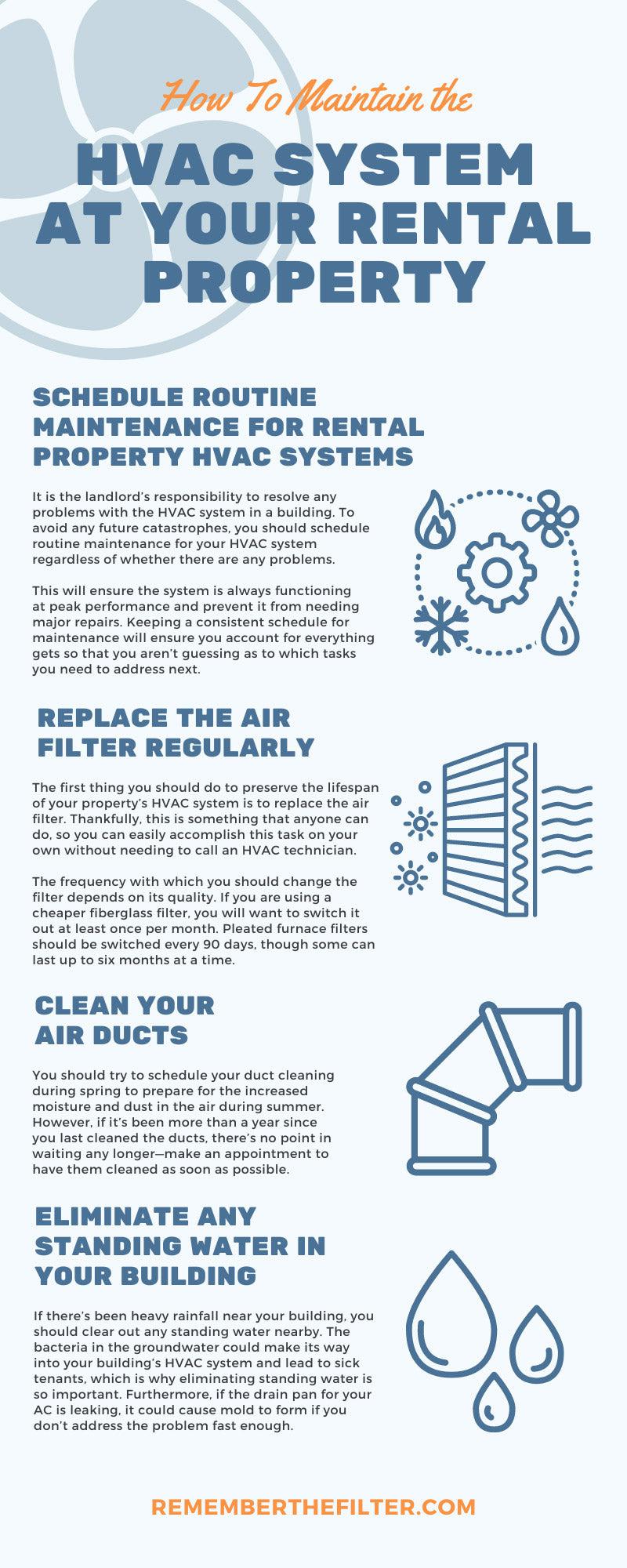
Don't wait for a breakdown. Put routine HVAC service on a calendar so the system runs at peak performance and small issues get caught before they become expensive. Summer is an ideal window to tackle bigger property work, painting, repairs, and HVAC servicing, so cooling is ready for the heat and heating is sorted well before the first cold snap.
Replace the air filter regularly
The single most valuable habit is also the easiest: change the filter. It's a no-tools job that anyone can do, and it protects both air quality and the equipment itself. How often depends on the filter:
- Flat fiberglass filters: swap roughly every 30 days.
- Pleated filters: typically last up to 90 days, though pets, dust, and heavy occupancy shorten that.
Don't stretch the interval, a clogged filter restricts airflow, drives up energy use, strains the blower, and lets dust recirculate to tenants. Buying furnace filters and AC filters in the right sizes online and keeping a few on hand makes the job painless; for standard returns, sizes like 16x25x1 are easy to stock. If a unit has an odd or hard-to-find opening, our custom-cut filters fit exactly. Whether tenants change filters or you do, spell it out in the lease, our notes on who's responsible for filter changes in a rental and on replacing filters in condos and apartments help set expectations. You'll also want a realistic sense of how often filters should be changed.
Inspect belts, bearings, and moving parts
Anything mechanical wears down through friction. Have a technician inspect belts and bearings periodically and confirm bearings are properly lubricated, so components don't grind against each other and fail early. It's a cheap check that heads off a costly outage.
Clean the ductwork
Because conditioned air travels the whole property through the ducts, have them cleaned thoroughly about once a year, ideally in spring, ahead of summer's heavier dust and humidity. Clean ducts keep tenant air quality high and the system running efficiently. If you spot the signs it's time for a duct cleaning, don't put it off.
Eliminate standing water and check the drain pan
After heavy rain, clear any standing water near the building, bacteria in groundwater can migrate into the HVAC system and make tenants sick. Watch the AC condensate drain pan too; a leak there breeds mold fast if it isn't addressed.
Handle the small stuff that adds up
A few indirect tasks matter more than they look. Replace thermostat batteries so a faulty reading doesn't burn extra fuel, and seal drafts and gaps around the property to lower utility costs. Little items, real savings.
Extend the system's life
Replacing an HVAC system is one of the priciest jobs in any rental, so stretching its service life protects your bottom line. Follow the steps above and build a relationship with a trusted technician, and a well-kept system can reasonably last 15 to 20 years. One more option worth weighing: reusable washable filters trade some filtration performance for lower waste and long-run cost, our review of washable filters lays out that decision.
Frequently asked questions
Is the landlord or tenant responsible for changing air filters?
It depends on the lease and local law. Many landlords assign routine filter changes to tenants but supply the filters, while the owner remains responsible for the system itself. Put the arrangement in writing to avoid disputes.
How often should a rental's HVAC filter be changed?
Roughly every 30 days for flat fiberglass filters and up to 90 days for pleated ones. Units with pets, heavy occupancy, or high dust may need changes more often.
How long should a well-maintained HVAC system last?
With regular filter changes, annual duct cleaning, and periodic professional inspections, a rental HVAC system can commonly last 15 to 20 years.